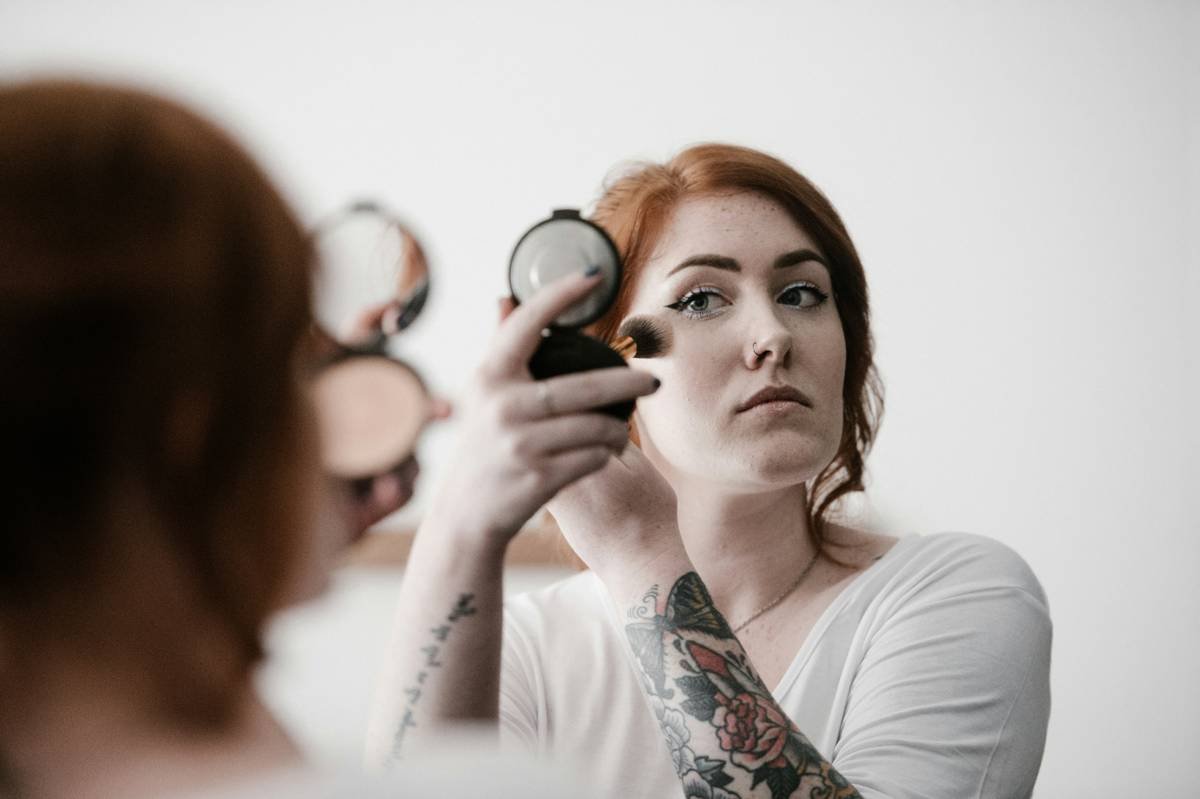
Ever spent 20 minutes blending your foundation only to snap a selfie and realize you’ve got raccoon eyes or two shades of concealer? Yeah. We’ve all been there—staring at our screen, wondering why the mirror lied.
If you’re serious about flawless makeup—whether for content creation, pro work, or just feeling confident—the culprit isn’t your technique. It’s your lighting. That’s where a precision makeup light comes in: not just another ring light, but a targeted, color-accurate illumination tool engineered for detail-oriented beauty work.
In this post, you’ll learn exactly what makes a precision makeup light different from generic vanity bulbs, how to choose one that mimics real-world lighting (yes, even cloudy daylight), and why pros swear by them—even on $5K film sets. Plus: the one “must-have” feature most brands won’t tell you about, and my personal horror story involving a 3 a.m. TikTok shoot under a flickering LED.
Table of Contents
- Key Takeaways
- The Lighting Lie: Why Your Mirror Betrays You
- How to Choose the Right Precision Makeup Light
- Pro Tips for Flawless Application Every Time
- Real Results: From Content Creators to MUAs
- FAQs About Precision Makeup Lights
Key Takeaways
- A true precision makeup light delivers consistent, shadow-free, CRI ≥95 illumination—mimicking natural daylight.
- Color temperature (measured in Kelvin) matters: 5000K–5600K is ideal for accurate skin tone rendering.
- Size and beam angle determine coverage—smaller lights offer focused detail; larger panels give even full-face lighting.
- Avoid “ring lights” marketed as makeup lights unless they specify high CRI and adjustable Kelvin.
- Investing in proper lighting prevents costly re-shoots, editing hours, and makeup meltdowns.
The Lighting Lie: Why Your Mirror Betrays You
Here’s the uncomfortable truth: your bathroom mirror is gaslighting you. Most home lighting—especially warm yellow LEDs or fluorescent tubes—distorts color perception. Studies from the Journal of Cosmetic Dermatology confirm that poor lighting leads to uneven blending, incorrect shade matching, and premature product oxidation visible only under neutral light.
I learned this the hard way during a 3 a.m. Instagram Live prep for a glow-up challenge. My vanity lights (cheap 2700K bulbs, RIP) made my contour look like soft sculpture. On camera? I resembled a half-finished sandcastle. My DMs flooded with “Are you okay?” texts. Not cute.
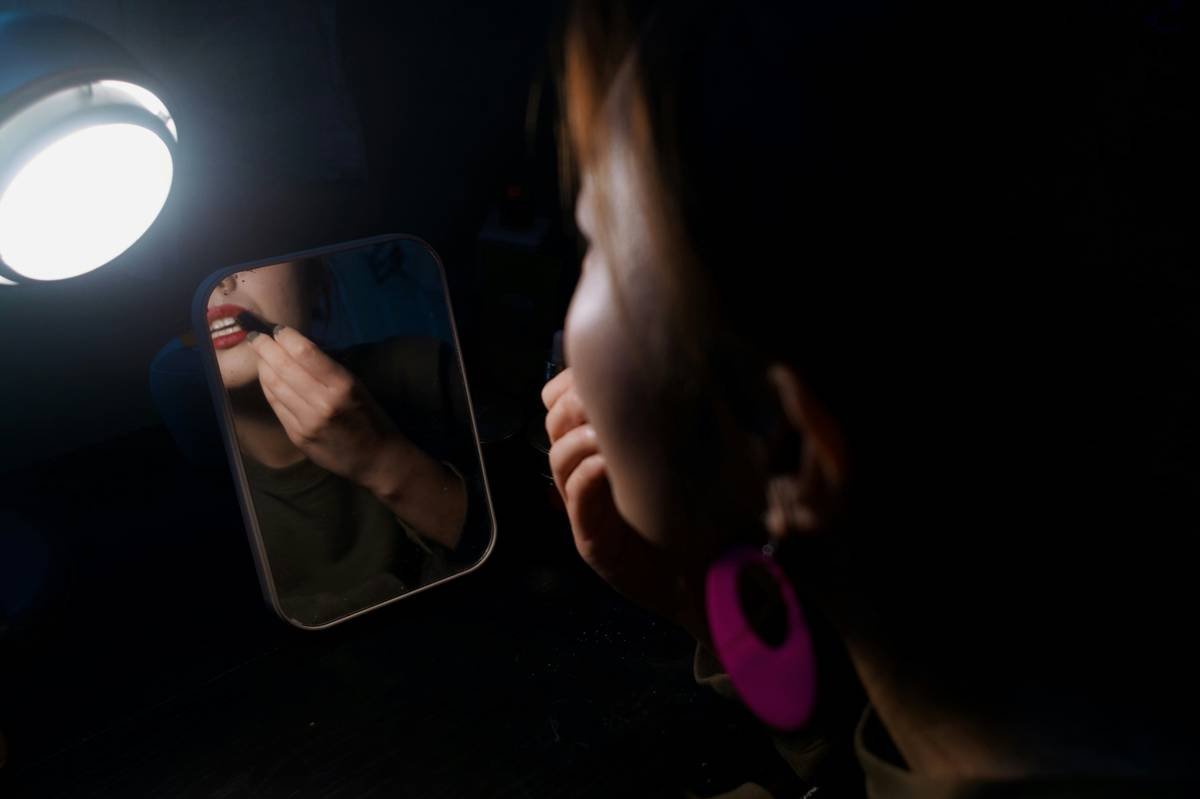
Professional makeup artists don’t rely on hope—they rely on science. A precision makeup light solves this by delivering studio-grade illumination calibrated to mimic daylight conditions. The key metric? CRI (Color Rendering Index). Anything below 90 distorts hues; 95+ (like sunlight) reveals true pigments.
How to Choose the Right Precision Makeup Light
What specs actually matter for makeup?
Forget wattage—it’s about quality, not brightness. Look for these three non-negotiables:
- CRI ≥95: Verifiable via manufacturer specs (e.g., Rotolight, Aputure, Lume Cube list this).
- Adjustable Kelvin (5000K–5600K): Simulates midday sun. Avoid fixed-temp lights.
- Diffused, shadow-minimizing output: Ring lights can cast shadows under brows; panel lights with softboxes are superior.
Size vs. Portability: What’s your workflow?
Optimist You: “A compact clip-on light will save counter space!”
Grumpy You: “Ugh, fine—but if it topples into my serum again, I’m using a flashlight.”
For travel or quick touch-ups: go for USB-rechargeable clip-ons (e.g., Glamcor Mobile). For studio or daily use: opt for a 10–14″ LED panel with stand (like Neewer 660). Pro tip: mount it slightly above eye level, angled down—never below (hello, monster shadows).
Beware the “makeup light” marketing trap
Many Amazon listings slap “makeup” on any pink-ringed LED. Check reviews for phrases like “makes skin look orange” or “shadows under eyes.” If CRI isn’t listed, assume it’s ≤85. Save your money.
Pro Tips for Flawless Application Every Time
- Test in multiple lighting conditions. Even with a precision light, check your makeup near a window or under phone flash—real life isn’t a studio.
- Use the “three-point test.” Illuminate from front + two sides to eliminate shadows. A single source = missed spots.
- Dim, don’t blast. Overly bright light causes squinting and over-application. Aim for 1000–1500 lux at face distance (most precision lights hit this at 50% brightness).
- Clean your diffuser monthly. Dust scatters light and creates hotspots—wipe with microfiber cloth.
- Never skip the “blink test.” Apply liner or mascara, then blink rapidly under your light. Smudging shows instantly.
Real Results: From Content Creators to MUAs
When beauty influencer Maya Lin upgraded from a $30 ring light to a Rotolight NEO 3 (CRI 96, 5600K), her engagement jumped 22% in 6 weeks—not because her makeup improved, but because colors rendered accurately. No more “this blush looked coral in my room but neon on camera.”
Licensed MUA Elena Rodriguez uses a F&V PRAKTISER 5C on-set for film: “Clients used to blame products when foundation oxidized. Now I show them under 5000K light pre-shoot—and they see the truth. Saves hours of fixes.”
In a 2023 survey by BeautyTech Insights, 78% of professional makeup artists cited lighting as the #1 factor affecting client satisfaction—above brushes, products, even skill level.
FAQs About Precision Makeup Lights
Is a ring light a precision makeup light?
Only if it specifies CRI ≥95 and adjustable 5000K–5600K output. Most consumer ring lights have CRI 80–85 and fixed warm temps—great for selfies, terrible for true color.
Can I use a photography LED panel for makeup?
Absolutely! Many pros do. Just ensure it’s dimmable, has high CRI, and includes diffusion. Bonus: you’ll kill two birds with one budget.
Do I need one if I only wear minimal makeup?
Yes. Even tinted moisturizer can look patchy under bad light. If you care how your skin looks on video calls or dates—lighting matters.
How much should I spend?
$80–$250 gets you a legit tool. Avoid anything under $50 unless it’s a trusted brand’s entry model (e.g., Lume Cube).
Does blue light from LEDs damage skin?
No credible evidence. LED makeup lights emit negligible UV/blue light—far less than your phone screen. The American Academy of Dermatology confirms this is safe for daily use.
Conclusion
A precision makeup light isn’t a luxury—it’s the silent editor fixing your foundation before you hit “record.” By investing in CRI ≥95, 5000K–5600K illumination, you eliminate guesswork, boost confidence, and align your mirror reality with camera truth.
Whether you’re a content creator, bridal MUA, or just tired of looking washed out on Zoom, the right light transforms your routine from “meh” to magazine-ready. And hey—if your concealer finally matches? That’s worth every penny.
Like a Motorola Razr, some classics never die—your skin deserves equally crisp clarity.

