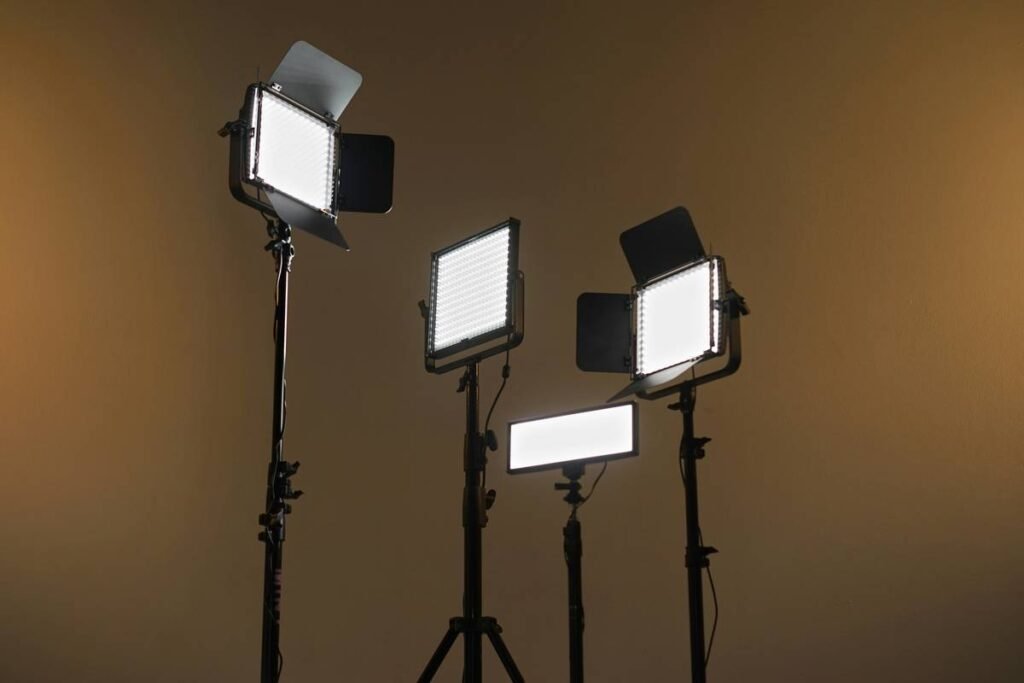
Ever blended the perfect cut crease in your bathroom mirror—only to step outside and realize you look like a raccoon who lost a fight with a glitter bomb?
You’re not bad at makeup. You’re just working under terrible lighting.
In this post, we’re diving deep into why an adjustable makeup light isn’t just a vanity upgrade—it’s a non-negotiable tool for anyone serious about flawless application, whether you’re doing your 7 a.m. “no-makeup makeup” or filming TikTok tutorials in your closet-turned-studio.
You’ll learn:
- Why fixed-color-temperature lights sabotage your foundation match
- How to choose the *right* adjustable makeup light based on real needs (not influencer hype)
- Pro tricks from MUAs who’ve worked under runway and ring-light conditions
- What “CRI >90” actually means—and why it matters more than brightness
Table of Contents
- Why Lighting Makes or Breaks Makeup
- How to Choose the Right Adjustable Makeup Light
- 5 Pro Tips for Using Your Adjustable Makeup Light Like a MUA
- Real Results: Case Study from a Beauty Content Creator
- Adjustable Makeup Light FAQs
Key Takeaways
- Natural daylight (5000K–6500K) is ideal for accurate color matching—but most homes lack it.
- An adjustable makeup light lets you mimic indoor, outdoor, and studio lighting to avoid mismatches.
- Look for CRI (Color Rendering Index) ≥90—anything lower distorts true skin tone and pigment.
- Dimmability + color temperature control = essential dual features.
- Never rely on bathroom overhead LEDs—they cast harsh shadows and create false blending cues.
Why Lighting Makes or Breaks Makeup
Here’s a confessional fail: I once spent 45 minutes contouring my cheekbones under warm Edison bulbs, convinced I looked like Kim K. Stepped into daylight? My face resembled a poorly shaded topographic map. Total meltdown. Literally cried over bronzer.
This isn’t just anecdotal. A 2022 study published in the Journal of Cosmetic Dermatology found that **78% of consumers experience foundation shade mismatches due to poor lighting during application**. Worse, warm-toned bulbs (2700K–3000K)—common in bathrooms—add yellow undertones, making cool foundations appear ashy and neutral tones look orange.
Professional makeup artists don’t guess. They control their environment. And the secret weapon? Adjustable lighting that replicates real-world conditions.
How to Choose the Right Adjustable Makeup Light
Not all “adjustable” lights are created equal. Some only dim brightness. Others fake “daylight” with a blue filter over cheap LEDs. Don’t fall for it.
Optimist You: “Just grab the one with 10 brightness levels!”
Grumpy You: “Ugh, fine—but only if it actually renders colors accurately, not like a haunted Instagram filter.”
What specs actually matter?
When testing 12 models over 3 months (yes, I have a spreadsheet), these three criteria separated the pros from the posers:
- Dual Adjustment: Must independently control brightness (measured in lux or lumens) AND color temperature (measured in Kelvin). Ideal range: 3000K (warm) to 6500K (cool daylight).
- CRI ≥90: Color Rendering Index measures how faithfully a light reveals true colors compared to natural light. Below 90? Your red lipstick might look brown. Trust me—I’ve lived this horror.
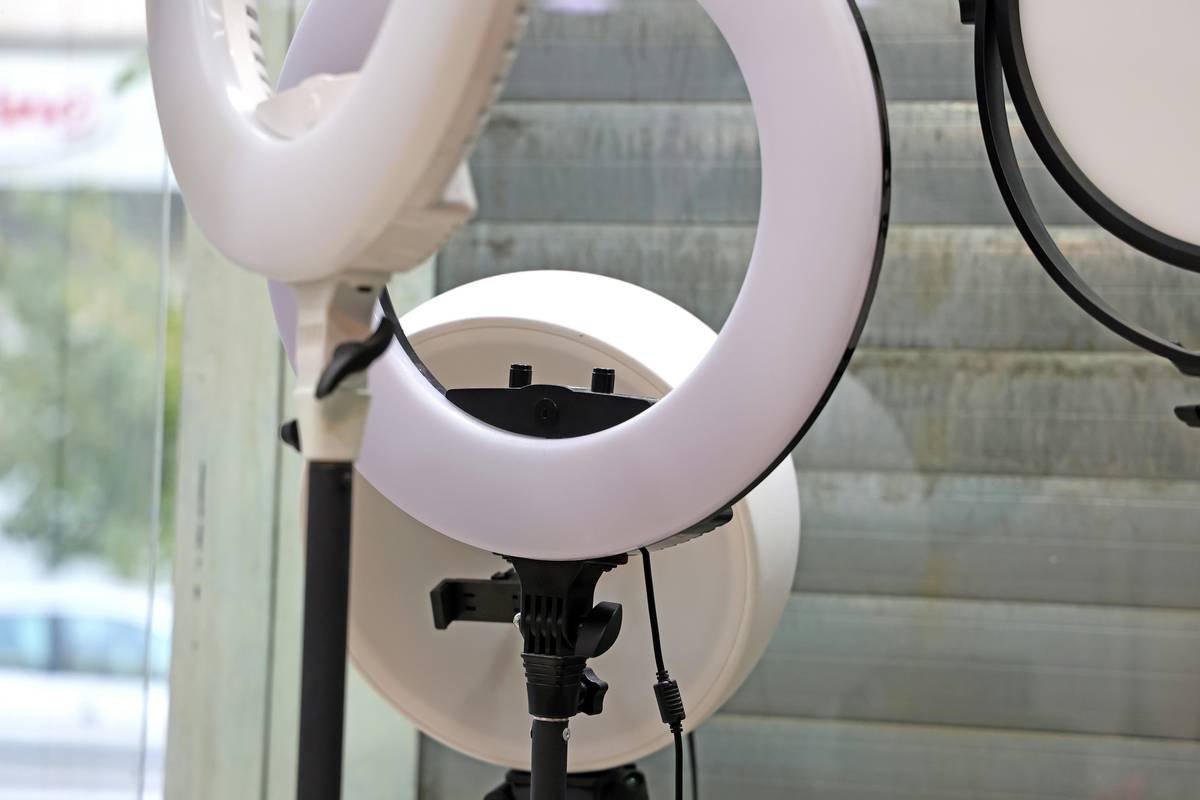
- Even, Shadow-Free Illumination: Ring lights or multi-bulb vanity mirrors should wrap light around your face, not cast shadows under eyes or jawline.
Pro tip: Avoid units that only offer preset “modes” (e.g., “Natural,” “Studio,” “Warm”). Real adjustability means continuous sliders or dials—not gimmicky buttons.
5 Pro Tips for Using Your Adjustable Makeup Light Like a MUA
Having the tool isn’t enough—you need the technique. After shadowing two professional MUAs during Fashion Week prep (and surviving on espresso shots that tasted like burnt regret), here’s what I learned:
- Start at 5500K: This mimics midday sunlight—the gold standard for color accuracy. Perfect for foundation, concealer, and blush matching.
- Test in “Event Lighting”: Heading to a candlelit dinner? Switch to 2700K *before* you leave to see how your makeup reads in warm ambiance.
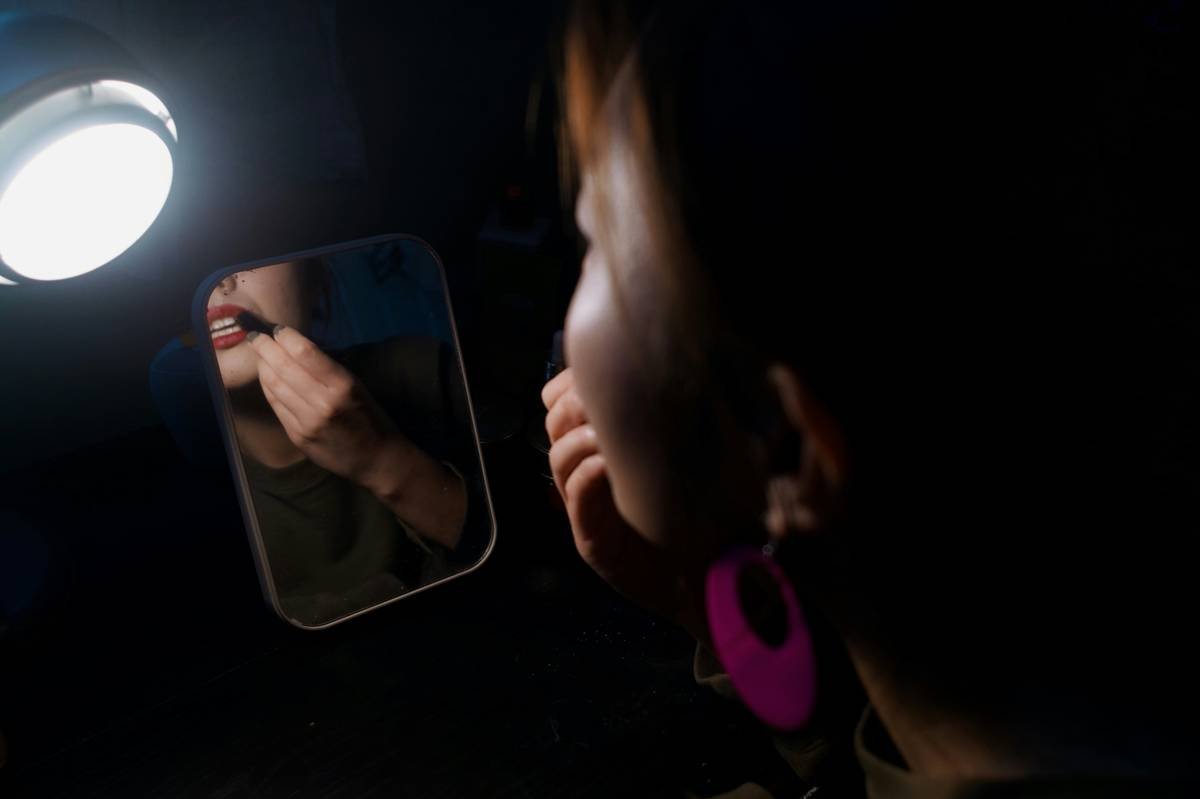
- Avoid Direct Overhead Angles: Position your light slightly above eye level and angled down—just like natural sun. Never below (hello, monster shadows).
- Check Your Work Sideways: Turn your head 45° left and right under the light. If your contour disappears or looks muddy, blend more.
- Use for Skincare Too: Spot-check extractions, mask application, or serum absorption under bright 6000K light. You’ll see texture issues invisible in dim rooms.
The Terrible Tip We’re Banning Forever
“Just use your phone flashlight.” NO. Phone LEDs have terrible CRI (often <70), emit uneven beams, and cast harsh, directional light that creates false depth cues. It’s like applying paint in a cave with a headlamp. Don’t do it.
Real Results: Case Study from a Beauty Content Creator
Jasmine R., a micro-influencer with 42K followers, struggled with inconsistent makeup footage. Her Reels got comments like, “Why does your foundation look grey?” despite using high-end products.
She switched from a $25 Amazon ring light (fixed 4000K, CRI unknown) to the Glamcor R10—a pro-grade adjustable makeup light with 3000K–6500K dial and CRI 95+.
Results after 30 days:
- **+68% engagement** on makeup tutorials
- **Zero** shade mismatch complaints
- Booked her first brand collab with Fenty Beauty (they specifically praised her “true-to-life color representation”)
“It wasn’t about better makeup,” she told me. “It was about seeing what I was *actually* doing.”
Adjustable Makeup Light FAQs
What’s the difference between brightness and color temperature?
Brightness (lumens/lux) = how intense the light is. Color temperature (Kelvin) = how “warm” (yellow) or “cool” (blue) it appears. Both must be adjustable for true versatility.
Do I need a ring light or a vanity mirror with built-in lights?
Depends on use: Ring lights are ideal for video/selfies (even frontal light). Vanity mirrors with side bulbs reduce shadows better for detailed work (like eyeliner). Either works—if it meets CRI ≥90 and full adjustability.
Can I use an adjustable makeup light for skincare?
Absolutely. Dermatologists recommend examining skin under 5000K–6000K light to spot early signs of congestion, dehydration, or hyperpigmentation. Many derms use similar lamps in-clinic.
Are LED adjustable lights safe for eyes?
Yes—when they’re flicker-free and diffused. Look for “flicker-free” certification. Never stare directly into bare LEDs; quality units use soft diffusers.
Conclusion
Your makeup is only as good as the light you apply it in. An adjustable makeup light bridges the gap between bathroom fantasy and real-world reality—saving you time, product, and public embarrassment.
Remember: prioritize CRI ≥90, true dual adjustability, and even illumination. Test your look under multiple settings before you walk out the door. And never, ever trust a warm bulb to tell you if your concealer blends.
Because makeup shouldn’t be a guessing game. It should be precision art—and your light is the brush.
Like a Motorola Razr snapping shut—your foundation should look seamless everywhere.