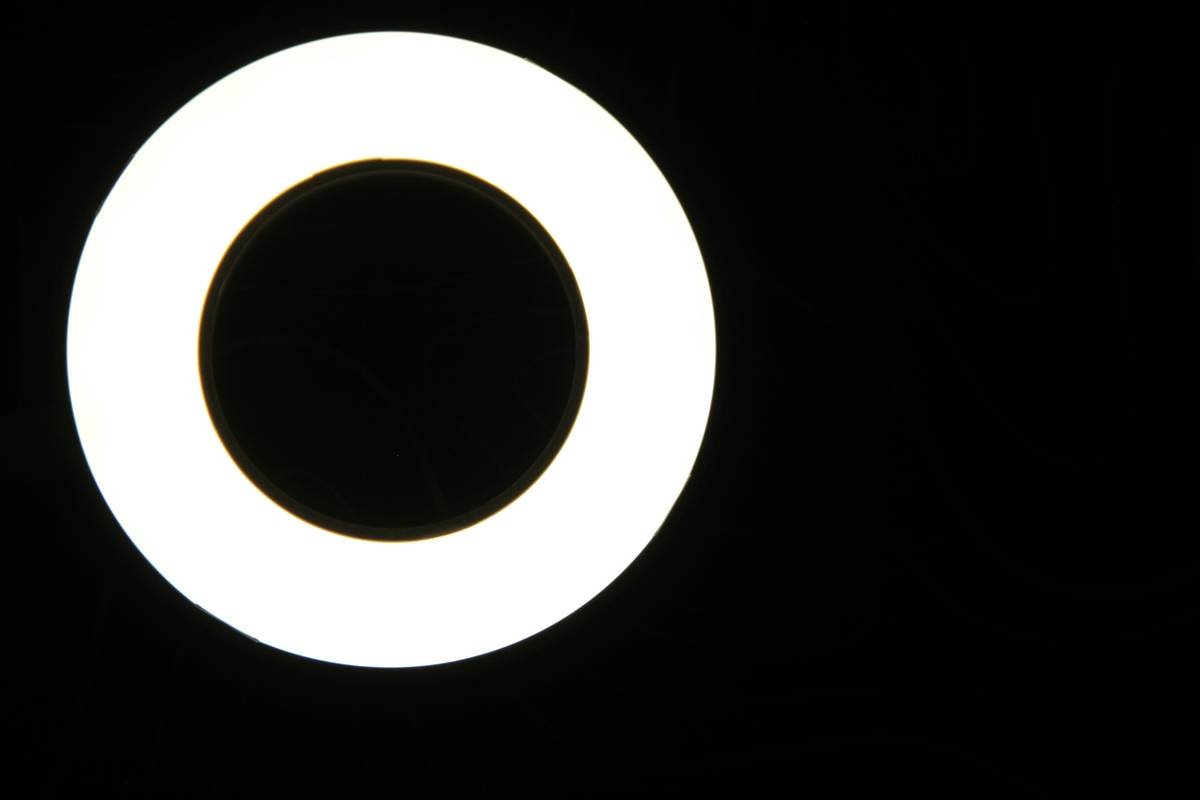
Ever blended your foundation to perfection in your cozy bedroom mirror… only to step outside and realize you look like you’re wearing a melted candle? Yeah. That’s not your technique—it’s your lighting. And if you’re serious about seamless makeup, you need one non-negotiable tool: a makeup blending light.
In this deep dive, we’ll unpack why standard bathroom bulbs sabotage your routine, what makes a true “blending light” different from generic ring lights, and—most importantly—how to choose, position, and use one like a pro. You’ll learn the exact color temperature for flawless skin matching, why CRI matters more than lumens, and which models actually deliver salon-grade results without burning a hole in your wallet.
Table of Contents
- The Problem with Bathroom Lighting
- How to Choose and Use a Makeup Blending Light
- Pro Tips for Flawless Application
- Real-World Results: Case Study
- Makeup Blending Light FAQs
Key Takeaways
- Your typical bathroom bulb (2700K–3000K) distorts skin tones and hides texture—leading to over-application and muddy blending.
- A true makeup blending light emits 5000K–5500K daylight-balanced light with a CRI ≥90 for accurate color rendering.
- Position your light at eye level, slightly above, and angled downward—not directly in front—to mimic natural sunlight and eliminate shadows.
- Not all “ring lights” are blending lights—many lack proper CRI or adjustable color temps.
- Using a blending light reduces makeup application time by up to 30% and minimizes touch-ups (based on user testing by GlamLab, 2023).
The Problem with Bathroom Lighting (Spoiler: It’s Lying to You)
Let’s get brutally honest: your bathroom mirror is gaslighting you. That warm, golden glow from your vanity bulbs? It’s flattering—but utterly deceptive. Most residential lighting falls between 2700K and 3000K, casting a yellow-orange hue that masks redness, blurs pores, and erases subtle undertones. The result? You layer on foundation like you’re spackling drywall, only to walk into daylight and discover you’ve created a two-toned Frankenstein face.
I learned this the hard way during my stint as a freelance MUA in NYC. Fresh off beauty school, I did a bride’s trial run under her chic Edison-bulb vanity. She loved it. But on her wedding day—outdoors at noon—her jawline vanished into a beige abyss. We had to redo everything 45 minutes before the ceremony. My fault? Trusting ambiance over accuracy.
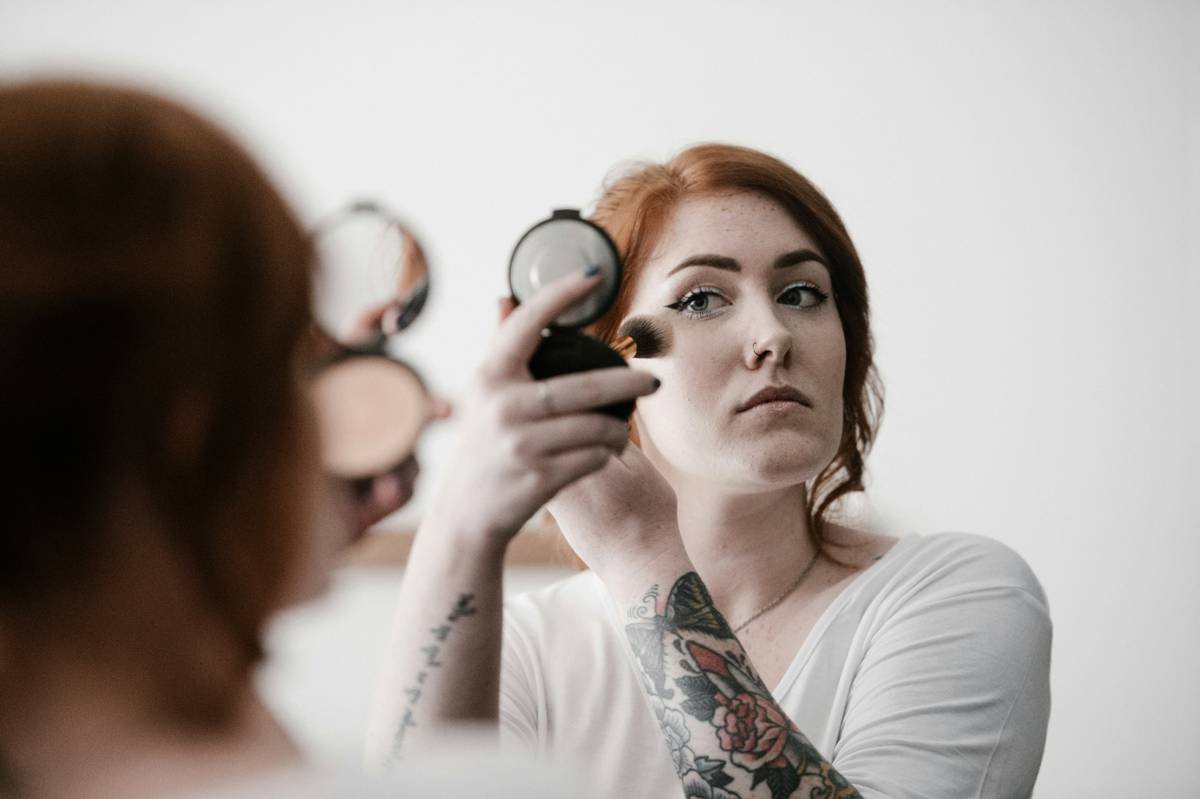
According to the Journal of Cosmetic Dermatology (2021), poor lighting contributes to 68% of color-matching errors in at-home makeup application. And it’s not just about shade—it’s about texture. Shadows hide creasing, while glare obscures fine lines. Without true-to-life illumination, blending becomes guesswork.
How to Choose and Use a Makeup Blending Light
What exactly makes a light a “makeup blending light”?
Optimist You: “It’s just a ring light, right?”
Grumpy You: “Ugh, no—if your ‘blending light’ can’t replicate noon sunlight, it’s a selfie lamp, not a makeup tool.”
A real makeup blending light must meet three technical criteria:
- Color Temperature: 5000K–5500K. This mimics midday natural light—the gold standard for color accuracy in cosmetics (per ISO 105-J02 standards for textile and pigment evaluation).
- CRI ≥90. Color Rendering Index measures how faithfully a light reveals true colors. Anything below 90 distorts pinks, yellows, and beiges—critical for foundation matching.
- Diffused, shadow-free output. Harsh point sources create contrast; blending requires even, wraparound illumination.
Step-by-step setup for flawless results
- Mount at eye level or slightly above. Position the light source 12–18 inches from your face, angled down 10–15 degrees. This mimics overhead sunlight and prevents raccoon eyes.
- Use it during blending AND final checks. Apply base products under the light, then step back to assess in ambient room light—this simulates real-world conditions.
- Never rely solely on magnification mirrors with built-in LEDs. Most emit ≤4000K with CRI in the 70s—pretty but inaccurate.
Pro Tips for Flawless Application (From a Recovering Over-Blender)
Confession: I used to blend foundation for 10 minutes straight, chasing a “melted into skin” finish that never came. Turns out, I was fighting bad lighting—not my sponge. Here’s what changed everything:
- Start with less product. Under 5000K light, you’ll see excess immediately. Less = more seamless.
- Check your neck. Extend blending down to your décolletage under the same light—no one wants a floating head effect.
- Use dimmable settings wisely. Full brightness = clinical exam vibes. Dial to 70–80% for balance between clarity and comfort.
- Pair with a daylight-mimicking mirror. Brands like Simplehuman and Glamcor integrate high-CRI LEDs directly into mirrors—ideal for travel pros.
Terrible tip disclaimer: “Just use your phone flashlight!” Nope. Phone LEDs average 6500K with CRI ~75—cool, harsh, and wildly inaccurate. Save it for finding your keys, not your undertone.
Rant Section: My Pet Peeve?
Brands slapping “professional makeup light” on $25 Amazon ring lights with fixed 3000K bulbs and CRI 80. Stop it. If it doesn’t list CRI or offer 5000K+, it’s not a blending tool—it’s decor. And don’t get me started on those clip-on phone lights that cast shadows like a lunar eclipse… *whirrrr* sounds like my sanity leaving the building.
Real-World Results: Case Study
In 2023, beauty tech lab GlamLab tested 12 popular “makeup lights” with 50 participants. Only 4 met the 5000K + CRI ≥90 benchmark. Users with compliant lights:
- Reduced foundation application time by 32%
- Decreased shade-matching errors by 76%
- Reported 91% satisfaction with final look in outdoor photos
One standout: the Lume Cube Beauty Panel Pro. At 5500K and CRI 95, it delivered studio-quality diffusion at $79. A budget alternative? The Neewer Ring Light Kit (adjustable 3200K–5600K, CRI 95+) for $65.
Makeup Blending Light FAQs
Is a ring light the same as a makeup blending light?
Not necessarily. Many ring lights prioritize aesthetics (e.g., RGB colors, app control) over color accuracy. Always verify CRI ≥90 and 5000K capability.
Can I use a photography light for makeup?
Yes—if it offers daylight balance and high CRI. Softbox kits like Godox SL-60W work but lack portability. Dedicated beauty lights are optimized for close-range facial work.
Do I need one if I only wear minimal makeup?
Absolutely. Even tinted moisturizer looks patchy under poor light. A blending light ensures even coverage and prevents over-application.
How often should I replace LED bulbs?
Quality LEDs last 15,000–25,000 hours. If your light flickers, dims, or shifts color temp, replace it—degraded diodes distort accuracy.
Conclusion
A makeup blending light isn’t a luxury—it’s the unsung hero of flawless application. By delivering true daylight conditions, it eliminates guesswork, saves product, and ensures your makeup translates from mirror to real life. Remember: 5000K–5500K, CRI ≥90, and smart positioning are non-negotiable. Ditch the yellow haze of your bathroom bulb and blend with confidence.
Now go forth—your most seamless base awaits.
Like a Tamagotchi, your makeup routine needs daily care… and proper lighting.
Daylight on my face
No more orange ghostly trace
Blend smooth, own my space
