You spend $40 on foundation that matches your jawline perfectly—only to step outside and realize it looks three shades lighter under daylight. Sound familiar? Most makeup artists will tell you lighting is just “nice to have.” They’re wrong. The real issue? You’re applying makeup in shadows, glare, or inconsistent bulbs that lie to your eyes. An essential makeup light isn’t a vanity prop. It’s your most honest mirror.
The Harsh Truth About “Natural Light Only” Makeup Routines
Relying solely on a window-facing vanity sounds ideal—until 3 p.m. hits and your soft morning glow turns into harsh afternoon contrast. Or worse: cloudy days trick you into over-applying contour because everything looks flat. And bathroom LEDs? Most emit a cool, bluish cast that washes out warm undertones. You end up correcting “mistakes” that never existed.
Here’s the reality: human vision adapts to ambient light within seconds. Your brain auto-corrects colors. But cameras—and other people—don’t. What looks blended in your dim bedroom appears streaky in office fluorescents.
Your Step-by-Step Guide to Choosing the Right Essential Makeup Light
Color Temperature Matters More Than Brightness
Aim for 5000K to 5500K—that’s “daylight white.” Anything below 4000K adds yellow (hello, orange concealer), while above 6000K creates a hospital-chic blue tint. Lumens? Shoot for 800–1200. Enough to illuminate without glare.
Placement Beats Power
No amount of wattage fixes poor angle. Lights should flank your face—not hover above or shine from below. Top-down lighting casts eye socket and nose shadows. Under-lit? You’ll look like a horror movie extra. Side-mounted rings or panels mimic how daylight actually falls.
Dimmable + Adjustable = Non-Negotiable
Your lighting needs shift with time of day, season, and even outfit color. A fixed-brightness panel becomes useless by winter. Look for stepless dimming and flexible goosenecks or wall mounts.
| Type | Best For | Pros | Cons | Price Range |
|---|---|---|---|---|
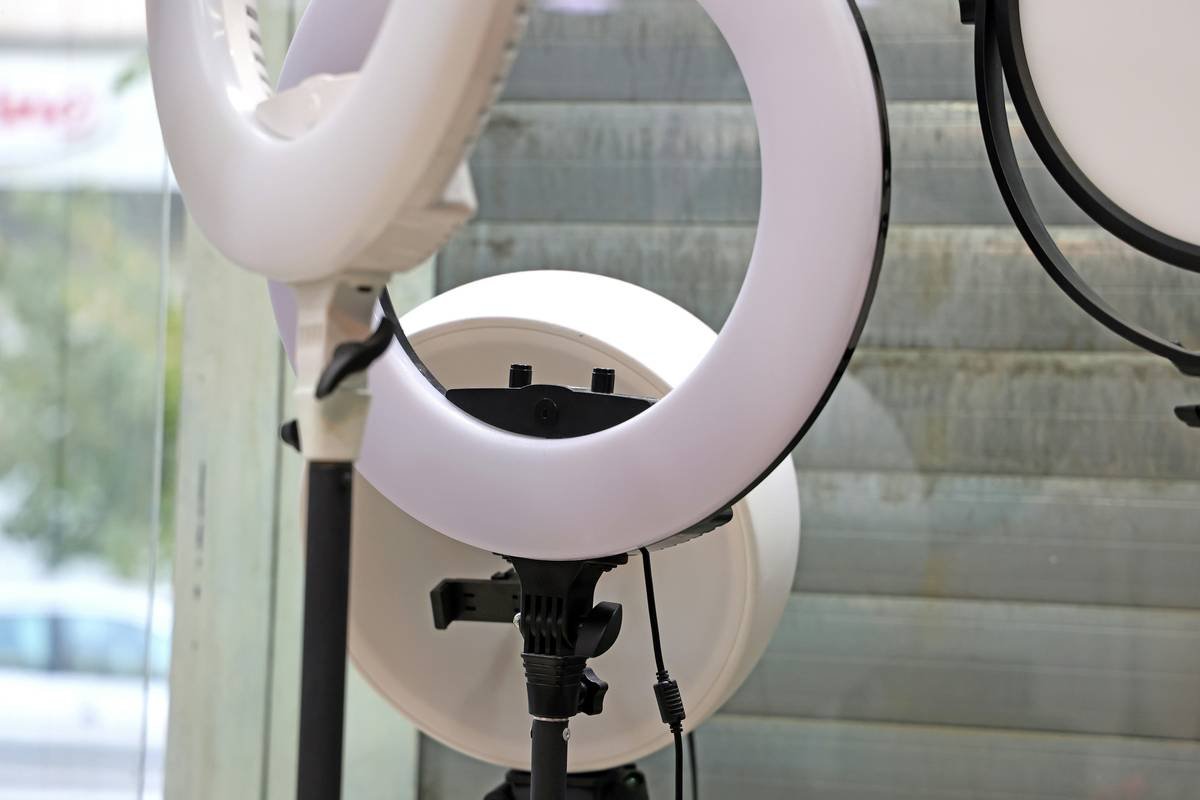
| Ring Light | Social creators, beginners | Circular catchlight, compact | Harsh center hotspot, unflattering shadows at edges | $25–$80 |
| LED Panel (Single) | Travel, small spaces | Portable, consistent spread | One-directional—requires repositioning | $40–$120 |
| Dual Softbox Setup | Pro results, serious enthusiasts | Studio-grade diffusion, zero glare | Bulky, needs outlet space | $90–$250 |
| Mirror-Integrated Light | Daily routine, minimalists | All-in-one, space-saving | Limited adjustability, often low CRI | $60–$180 |
The Industry Secret: CRI > Everything Else
Most brands tout “daylight bulbs” but omit Color Rendering Index (CRI). If it’s not listed, assume it’s below 80. That’s catastrophic. CRI measures how accurately a light reveals true color. Sunlight = 100. Cheap LEDs? Often 70–75. At 80, red lipstick looks brownish. At 90+, you see every pigment nuance.
Top-tier makeup artists only use lights rated CRI 95+. Why? Because foundation matching fails aren’t about shade—they’re about spectral distortion. One brand quietly dominates backstage at Fashion Week: not a beauty label, but a film grip company. Their secret? High-CRI COB LEDs originally made for cinematography. Now available—just not marketed as “essential makeup light” gear.
Frequently Asked Questions
Do I really need an essential makeup light if I only wear minimal makeup?
Yes. Even tinted moisturizer can oxidize differently under poor light. Five minutes with accurate lighting prevents daytime corrections.
Can phone flashlights work in a pinch?
Never. They’re ~6500K with terrible CRI—plus directional. You’ll miss texture flaws and over-blend.
How close should my essential makeup light be to my face?
12–18 inches. Closer causes hotspots; farther loses definition. Angle slightly downward at 30 degrees.