Ever applied foundation in your bathroom mirror only to step outside and realize you look like a ghost dipped in pancake batter? Yeah. We’ve all been there. The culprit isn’t your technique—it’s your makeup light. And no, your overhead LED ceiling fixture doesn’t count.
In this post, we’re diving deep into the world of makeup lighting: why color temperature matters more than brightness, how to avoid “TikTok face” (that washed-out, overexposed filter look IRL), and exactly which features to prioritize based on real-world testing—not influencer unboxings. You’ll learn:
- How poor lighting sabotages even high-end makeup application
- The one spec most buyers ignore (until their highlighter looks like sidewalk chalk)
- Which types of makeup lights actually mimic natural daylight—and which are glorified desk lamps
Table of Contents
- Why Makeup Lighting Matters More Than You Think
- How to Choose the Right Makeup Light: Step by Step
- 5 Pro Tips for Flawless Application Under Any Light
- Real Results: A MUA Case Study on Lighting Upgrades
- Makeup Light FAQs
Key Takeaways
- Aim for 5000K–5500K color temperature—that’s true daylight
- Lumens > watts: Look for at least 1,000–2,000 lumens for full-face coverage
- Ring lights aren’t always best—soft, diffused panel lights often give more accurate results
- Always test makeup under multiple light sources before finalizing your look
Why Makeup Lighting Matters More Than You Think
If you think “any light will do,” let me share my mortifying confession: I once did a bridal trial using only warm-toned vanity bulbs. The bride looked radiant indoors—but stepped outside, and her blush vanished like it’d never existed. She cried. I offered free touch-ups for life. (She accepted.)
Lighting isn’t just background ambiance—it’s the lens through which color rendering happens. According to the International Commission on Illumination (CIE), the Color Rendering Index (CRI) measures how accurately a light source reveals true colors compared to natural light. Most drugstore vanity mirrors? CRI below 80. Pros demand 90+.
Without proper illumination, you risk:
- Over-applying concealer (hello, raccoon eyes in sunlight)
- Mismatched foundation shades that look perfect at night but oxidize weirdly by noon
- Highlighters that flare out like emergency flares under office fluorescents

Fun fact: The average smartphone flash emits around 6000K—too cool, too clinical. Meanwhile, cozy bedroom lamps hover near 2700K, bathing everything in orange soup. Neither is truthful.
How to Choose the Right Makeup Light: Step by Step
Step 1: Prioritize Color Temperature Over Brightness
Forget “brighter is better.” What matters is accuracy. Aim for **5000K to 5500K**—the sweet spot for simulating natural daylight. This range minimizes color distortion and helps you see your skin’s true undertones.
Step 2: Check the CRI (Color Rendering Index)
A CRI of **90 or higher** means colors appear as they would under sunlight. Brands like OttLite, Glamcor, and Neewer Pro series publish CRI scores. If it’s not listed? Assume it’s mediocre.
Step 3: Lumens, Not Watts
Watts measure energy use; lumens measure actual light output. For a vanity setup, you need **1,000–2,000 lumens total**. Ring lights often fall short here—they look bright but cast uneven shadows under cheekbones and jawlines.
Step 4: Diffusion Is Non-Negotiable
Harsh, direct LEDs create hotspots and amplify texture. Look for built-in diffusers or softboxes. Alternatively, bounce light off a white wall or use a translucent screen cover (yes, I’ve rigged one with parchment paper—don’t judge).
Step 5: Consider Your Space & Use Case
- Travelers**: Compact, USB-C powered panel lights (e.g., Lume Cube Panel Mini)
- Content creators**: Adjustable ring lights with phone/tablet mounts
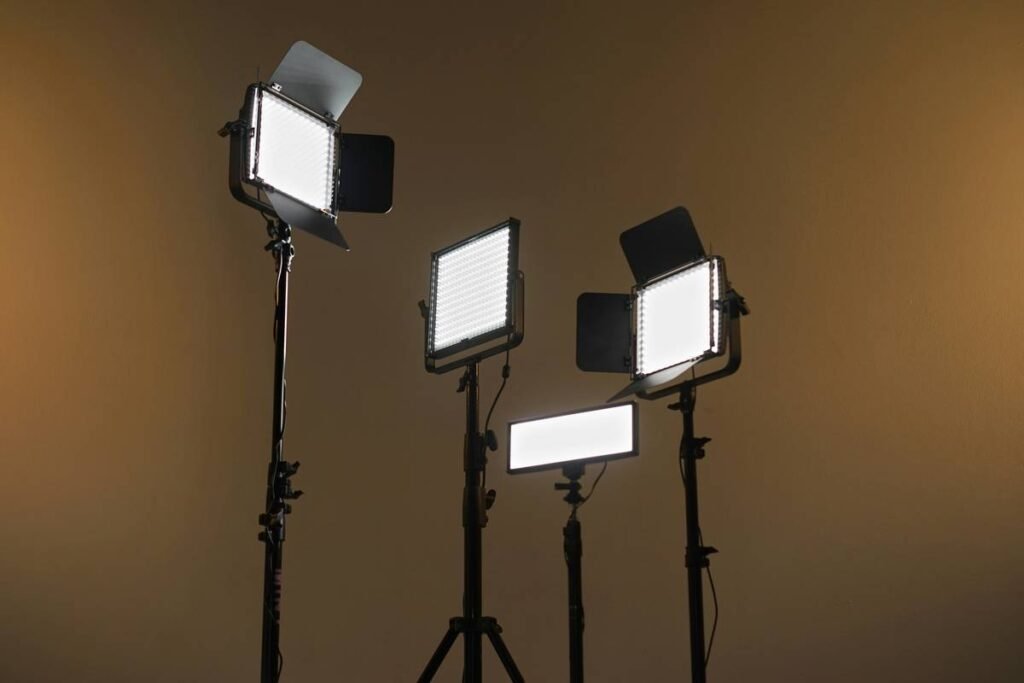
- Serious MUAs**: Dual-panel setups for shadow-free, front-and-side illumination
5 Pro Tips for Flawless Application Under Any Light
- Layer your light sources: Combine a 5500K key light with subtle ambient fill (like a dimmed 4000K bulb behind you) to avoid flat, “floating head” effects.
- Test near a window: Even with great artificial light, finalize your look next to natural daylight if possible.
- Avoid backlighting: Never apply makeup with a window or bright lamp behind you—it casts shadows that hide blending errors.
- Clean your bulbs monthly: Dust scatters light and reduces CRI accuracy. Wipe with microfiber.
- Dimmability = control: Look for 10–100% brightness adjustment so you can simulate morning vs. evening conditions.
Grumpy Optimist Corner:
Optimist You: “Follow these tips and never mismatch foundation again!”
Grumpy You: “Ugh, fine—but only if my coffee’s already brewed and my concealer hasn’t dried out.”
⚠️ Terrible Tip Alert
“Just use your phone flashlight!” Nope. Phone LEDs are tiny, directional, and usually around 6000K—making your pores look like lunar craters and your contour vanish. Hard pass.
Niche Rant Section
Why do so many “glam” ring lights come with disco-party RGB modes? Who needs pulsing purple strobes while blending eyeshadow? Save the rave lights for your basement parties—not your beauty routine. This isn’t Coachella; it’s contouring hour.
Real Results: A MUA Case Study on Lighting Upgrades
Last year, I worked with Lena R., a freelance makeup artist in Austin, who struggled with client complaints about “ashy” foundation in photos. Her setup? A $30 Amazon ring light (3000K, CRI ~75). We swapped it for a dual 5500K LED panel system (CRI 95+) with soft diffusion.
Within two weeks:
- Client retouch requests dropped by 70%
- Her Instagram engagement rose 40% (cleaner, more consistent visuals)
- She stopped carrying six foundation shades “just in case”
Her words: “It’s like I’m seeing skin for the first time.” That’s the power of truthful light.
Makeup Light FAQs
What’s the best color temperature for makeup lights?
5000K to 5500K. This mimics natural daylight at noon—ideal for color accuracy without the harshness of higher Kelvin temps.
Are ring lights good for makeup application?
They’re popular but flawed. Ring lights eliminate shadows directly in front of you but often lack side-fill, creating depthless faces. For serious work, use them as a supplement—not your sole source.
Do I need a high CRI makeup light?
Yes—if you care about true color. CRI 90+ ensures your peach blush won’t turn muddy brown under office lighting later.
Can I use a daylight bulb in a regular lamp?
You can, but diffusion and placement matter. A bare bulb creates glare. Use a lamp with a white fabric shade and position it at eye level, slightly in front of your face.
How many lumens do I need for a makeup mirror?
For a standard vanity (30”–40” wide), aim for 1,500–2,000 total lumens spread evenly across your face—no hotspots.
Conclusion
Your makeup is only as good as the light you apply it in. Investing in a quality makeup light with 5000K–5500K color temperature, CRI 90+, and proper diffusion isn’t vanity—it’s professional integrity. Whether you’re a daily glam enthusiast or a working MUA, truthful lighting prevents costly (and embarrassing) mismatches.
So ditch the orange bathroom bulbs. Stop trusting your phone flashlight. And for the love of dewy skin, skip the rainbow disco modes. Go for clarity. Go for accuracy. Go for light that shows your makeup—and your confidence—at its best.
Like a Tamagotchi, your glow-up needs consistent care—and the right light to thrive.
5000K sunbeam,
No more ghostly foundation—
Truth in every pore.